Need TV Repair Services in Nairobi?
Certified technicians dispatched to you — same day.
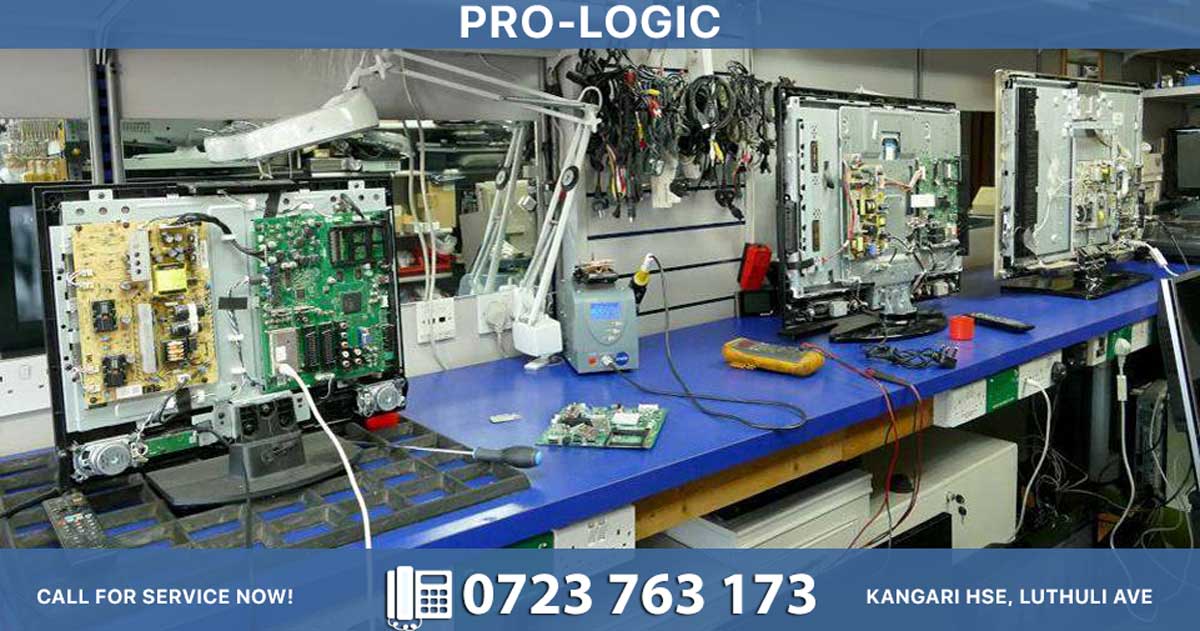
Swapping a damaged TV chassis can fix a bent or broken frame, but it carries several practical and technical risks if not handled carefully.
Physical damage to the screen or panel
-
The screen is fragile and sits directly behind the chassis; excessive force, flexing, or mis‑aligned screws can crack or crush the panel.
-
If the outer bezel and frame are already warped, repeated prying or pressure points can translate stress into the LCD/OLED layer, causing dead pixels, lines, or complete image failure.
Risk of damaging internal boards and cables
-
During disassembly, ribbon cables (LVDS, power, T‑Con) can be torn, bent, or pulled out of their connectors, leading to blank or distorted screens.
-
Motherboard, power‑supply, and HDMI boards are often clipped to the chassis; forcing them can crack solder joints, lift connectors, or break small components.
Misalignment and mechanical instability
-
An incorrectly seated chassis can cause the screen to sit unevenly, leading to uneven pressure on the panel and possible long‑term image artifacts or delamination.
-
A poorly aligned frame can make the TV wobble on its stand or when wall‑mounted, creating a safety hazard and extra wear on the base and screws.
Voiding or worsening warranty issues
-
Many manufacturers treat chassis‑swap work as “unauthorized modification,” especially if done DIY or by an uncertified technician, which can void the remaining warranty on the set.
-
If the chassis change is done to cover a pre‑existing screen or board fault, the underlying problem may resurface later, making it harder to claim any warranty.
Safety and electrical hazards
-
Capacitors and power‑supply sections can retain dangerous voltages even after the TV is unplugged; accidental contact while handling the chassis can cause shocks or short‑circuits.
-
Damaged or loose metal edges on the chassis can create ground‑loop issues, interference, or even partial short‑circuits if they contact live components.
Residual aesthetic and resale issues
-
Replacement or generic chassis may not match the original finish, screw‑hole pattern, or badge position, making the TV look “repaired” rather than factory‑condition.
-
Potential buyers or service centers may view a chassis‑swapped unit as higher‑risk, which can lower resale value and make future support more difficult.
In practice, the safest approach is to keep the screen and internal layout exactly as‑documented during disassembly, use the correct torque on screws, and have the work done by a technician who already has experience with that TV model’s chassis layout.