Need TV Repair Services in Nairobi?
Certified technicians dispatched to you — same day.
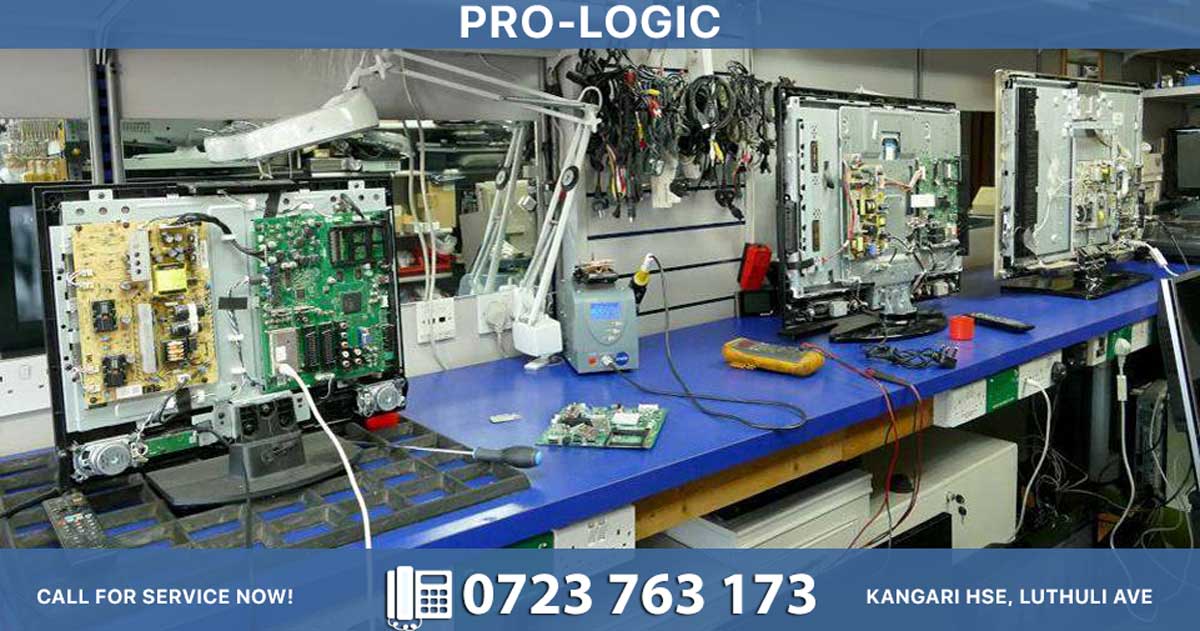
The main board, also known as the motherboard or logic board, is the central component of a TV that controls all its functions, including video and audio processing, input switching, and user interface. A failed main board can cause a wide range of issues, from no power to display artifacts, audio problems, or complete system failure. Identifying a failed main board requires a systematic approach to rule out other potential causes and confirm the diagnosis.
The first step is to observe the symptoms. A failed main board can manifest in various ways, depending on the extent of the damage. Common symptoms include the TV not turning on at all, even though the power light may be on or blinking. In some cases, the TV may turn on but display no picture or a distorted image. Other symptoms include no sound, unresponsive controls, or random reboots. If the TV exhibits multiple issues simultaneously, such as no picture, no sound, and unresponsive controls, the main board is a likely culprit.
Check the power supply before concluding the main board has failed. The power supply board provides voltage to the main board and other components, and if it fails, the TV may not function correctly. Inspect the power supply board for visible signs of damage, such as bulging capacitors, burn marks, or a burning smell. If the power supply is faulty, it may need to be repaired or replaced. To test the power supply, use a multimeter to measure the output voltages. Compare the measured voltages to the expected values, which are often printed on the board or in the TV service manual. If the power supply is providing the correct voltages, the issue may be with the main board.
Test the TV with different inputs and devices. If the TV fails to display a picture from all inputs, including the internal menu, the main board may be the issue. If the TV works with some inputs but not others, the problem may be with the specific input port or the connected device. Similarly, if the TV has sound but no picture, or vice versa, the issue may be with a different component, such as the display panel or backlight. By testing different inputs and observing the symptoms, you can isolate the problem to the main board.
Inspect the main board for visible signs of damage. Look for burn marks, discoloration, or bulging components, such as capacitors or ICs. A failed capacitor is a common cause of main board issues and often shows visible signs, such as a bulging top or leaking electrolyte. Similarly, resistors may show burn marks or discoloration if they have failed. Inspect the solder joints for cracks, cold joints, or bridges between adjacent pads, as these can cause connectivity issues. If you see any obvious damage, the main board may need to be repaired or replaced.
Use a process of elimination to confirm the main board is the issue. If possible, try swapping the main board with a known-good board from a similar TV. If the TV works with the replacement board, the original main board is likely faulty. This process requires compatible boards and is best done by professionals. Alternatively, if you have a schematic or service manual for the TV, you can use it to trace the signal paths and identify the likely source of the issue. However, this requires advanced knowledge of electronics and specialized equipment, such as a multimeter or oscilloscope.
If you suspect the main board has failed, consider the cost and practicality of repair. Replacing a main board can be expensive, often costing as much as or more than a new TV, especially for older or smaller models. Additionally, main board repairs require disassembling the TV and handling delicate components, which carries risks if not done carefully. If the TV is still under warranty, contact the manufacturer for support, as main board failure is typically covered. If the TV is out of warranty, weigh the cost of repair against the price of a new set. For newer or high-end TVs, repair may be a cost-effective option, but for older or budget models, replacement is often more practical.