Need TV Repair Services in Nairobi?
Certified technicians dispatched to you — same day.
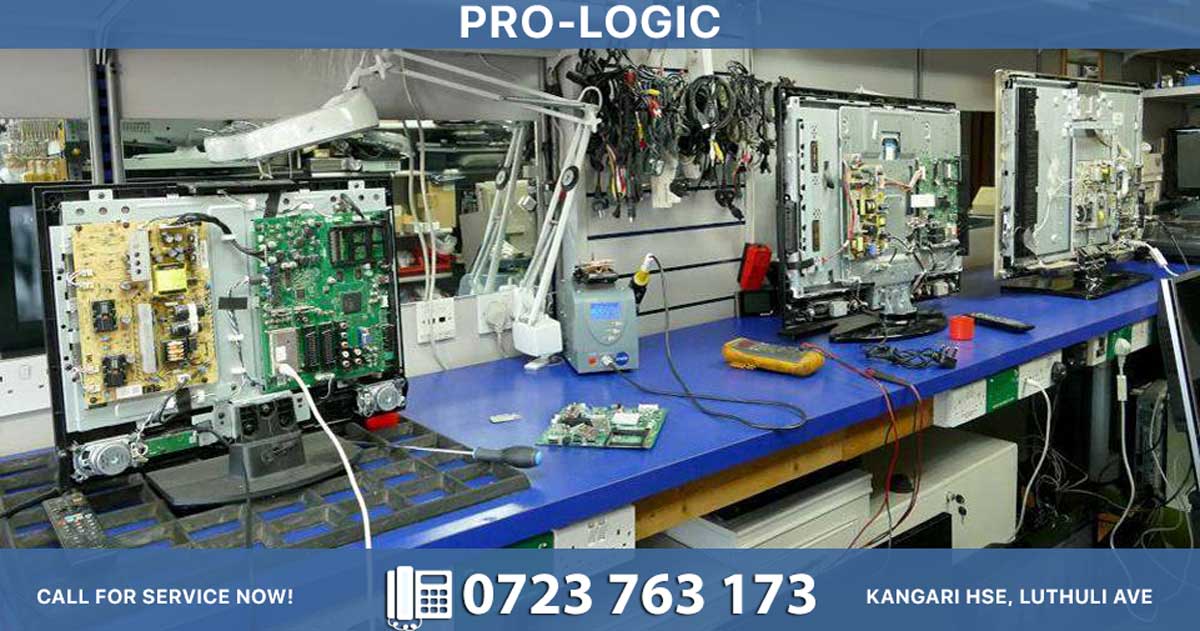
When you are about to hand over your TV, fridge, AC, or any other appliance, a few smart questions can quickly separate a genuinely technical technician from someone who just talks confidently. Ask these questions in plain language; if the technician understands electronics, they should be able to answer clearly and consistently.
1. Questions about how they diagnose faults
Ask in a way that shows they have a systematic approach, not guesswork:
-
“How will you test this TV to know what’s actually broken?”
A good answer will mention checking power supply, fuses, capacitors, backlight, T‑CON, and board‑level signals, not just “we’ll open it and see.” -
“What tools will you use to test it?”
You should hear multimeter, power‑supply tester, board‑tester, and ESD‑safe benching, not just “screwdriver and experience.” -
“Can you show me where the fault is on the board or screen?”
A knowledgeable technician can point to the burnt capacitor, cracked trace, or blown LED, and explain why it matters.
2. Questions about components and boards
These questions reveal if the technician understands the inside of the machine, not just the brand label:
-
“What board is usually responsible for no power or no picture on this kind of TV?”
The right answer names power board for no power, backlight / T‑CON / main board for no picture or distorted image. -
“If the TV has sound but no picture, is it always the panel?”
A sharp technician will say no: it could be backlight, LED strip, T‑CON, or LVDS cable, and panel replacement is only needed if those are ruled out. -
“Do you replace just the faulty part or the whole board?”
The better‑practice answer is repair the faulty section where possible (capacitors, fuses, ICs); replacing only the bad component is usually cheaper and more correct than swapping the whole board blindly.
3. Questions about safety and work standards
Technical skill without safety awareness is dangerous. Ask:
-
“How do you protect the rest of the TV or appliance when you test or repair?”
They should mention ESD mats, insulated tools, proper grounding, and safe discharge of high‑voltage sections (e.g., CRT or power‑board areas). -
“Do you wear safety gear when working on high‑voltage parts?”
A responsible technician will reference insulated gloves, goggles, and avoiding live‑board work where possible. -
“What do you do if you find a serious safety risk, like a burnt‑out capacitor or leaking oil in a compressor?”
They should say they will stop work, inform you, and advise on safe options—not hide the risk to push for a quick repair.
4. Questions about parts and warranties
A technician who truly understands their work will be transparent about parts and guarantees:
-
“What brand or type of spare parts do you use?”
Look for answers like genuine parts, high‑quality compatible parts, or “OEM‑equivalent,” not vague “the best we can find.” -
“Will you reuse the original board or replace it with something new?”
If they reuse, they should explain how they test and repair it; if they replace, they should justify why the original is not repairable. -
“What warranty do you give on this repair, and what does it cover?”
A proper answer is a clear time period (e.g., 30–90 days) and scope (labour, parts, or both). If they dodge or say “no warranty, electricity is the problem,” that is a red flag.
5. Questions about cost and repair logic
These questions reveal if their pricing is based on diagnosis or guesswork:
-
“Why is this repair priced this way?”
A trustworthy technician will break it down: parts cost + labour, and may compare it with buying a new unit if the repair is close in price. -
“If the repair is almost as expensive as a new TV / fridge / AC, would you still recommend it?”
A technically honest person will say “Only if the machine is relatively new and the rest is in good condition,” and might suggest replacement instead. -
“Can you repair this instead of replacing the whole panel / compressor / motor?”
They should be able to say “Yes, because only this section is damaged” or “No, because the rest is also failing,” with a brief explanation.
6. Questions about experience and learning
You can also probe how they keep their skills updated:
-
“How long have you worked specifically on [TVs, fridges, ACs, etc.]?”
Their answer should show years of focus on that type of equipment, not “everything and anything.” -
“Where do you get information or diagrams for rare models?”
The right reply will mention service manuals, online schematics, parts catalogs, and professional‑only forums, not “we just experiment.” -
“Have you ever had a repair fail and had to fix it again? What did you change?”
An honest technician will admit this happens and explain how they improved their testing or part‑selection the second time.
7. Questions to test their clarity and communication
Strong technical knowledge is useless if the technician cannot explain it clearly:
-
“Can you describe the problem in simple words, not just technical terms?”
They should be able to explain what is broken and what it affects without jargon overload. -
“If I record a video of the fault, can you use that to help diagnose?”
A modern‑minded technician will say yes and may ask for power‑on delay, sound, and any error codes visible on screen. -
“How will you contact me if there is a delay or extra cost?”
You should hear WhatsApp, SMS, or call updates, with clear thresholds for when they will inform you before adding more work.
By using these questions before you drop off your device, you can quickly separate a confident-but‑shallow technician from someone who truly understands the technical side of your appliance and can repair it safely and honestly.