Need TV Repair Services in Nairobi?
Certified technicians dispatched to you — same day.
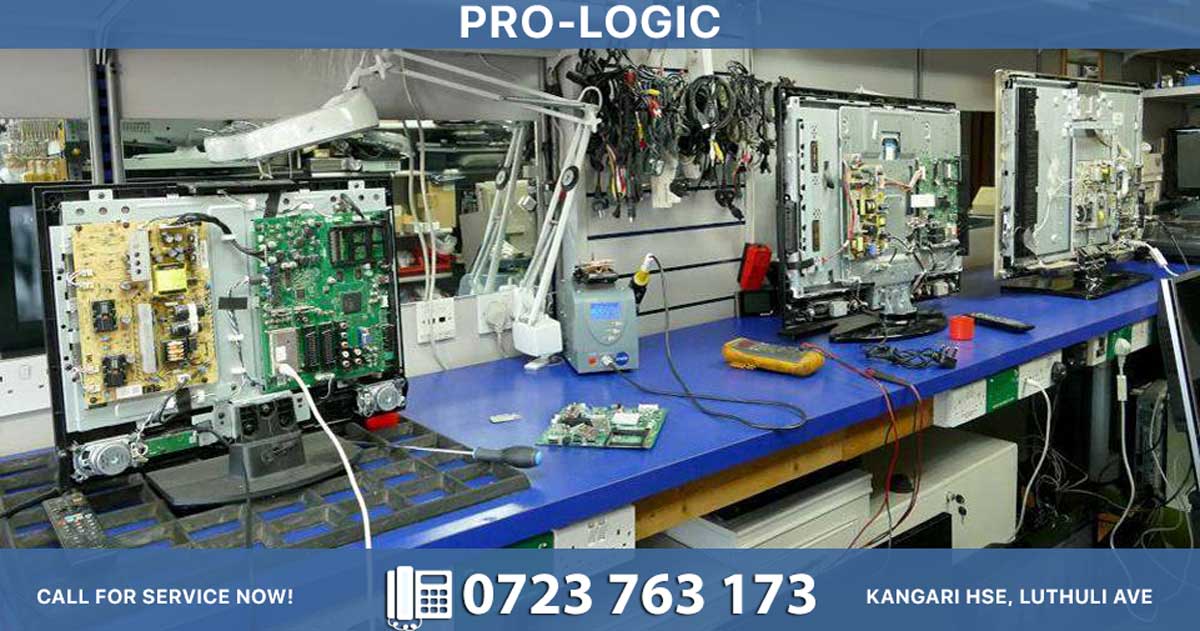
A completely unresponsive TV can be frustrating, but most issues have simple fixes. Follow this step-by-step guide to diagnose and resolve the problem.
Step 1: Basic Power Checks
Check the Power Source
-
Verify the outlet works: Plug in another device (like a phone charger or lamp) to confirm the wall outlet is functional.
-
Inspect the power cable: Look for visible damage, frayed wires, or loose connections at both ends.
-
Try a different outlet: Use a known-working power socket, preferably on a different circuit.
Test the Power Cord
-
Unplug and reconnect: Remove the power cable from both the TV and wall, wait 30 seconds, then reconnect firmly.
-
Try a different cable: If available, use a compatible power cord from another device.
Check Power Indicators
-
Standby light: Most TVs have a small LED that glows red/white when plugged in (even if "off"). No light = no power reaching the TV.
-
Blinking light: A blinking LED often indicates a specific error code. Count the blinks and check your TV's manual.
Step 2: Remote and Control Issues
Test the Remote
-
Replace batteries: Even if they seem fine, try fresh batteries.
-
Use the power button on the TV: If the TV turns on manually but not with the remote, the remote is likely faulty.
-
Check for IR interference: Remove any objects between the remote and TV's IR receiver.
-
Test with a phone camera: Point the remote at your phone camera and press buttons. If the IR LED flashes (visible on camera), the remote is transmitting.
Try Alternative Inputs
-
Use a universal remote or a smartphone app (if your TV supports it).
-
Check HDMI-CEC: If connected to a device like a gaming console, try turning on the TV via that device's power-on command.
Step 3: Power Supply Problems
Internal Power Board Failure
If the TV has no power light at all and you've confirmed the outlet/cable work:
-
The internal power supply board may have failed (common in older TVs).
-
Symptoms: No response, no lights, no sound, no fan noise.
How to Test
-
Listen for clicking sounds: A repeated clicking noise may indicate a failing power board.
-
Smell for burning: A burnt odor suggests a blown capacitor or short circuit.
-
Inspect for bulging capacitors: If comfortable opening the TV, look for swollen or leaking capacitors on the power board.
Solutions
-
Professional repair: Power board issues require technical expertise. Contact a TV repair technician.
-
Replacement board: Search for a replacement power board using your TV's model number (e.g., "Samsung UN55NU8000 power board").
Step 4: Advanced Checks
Reset the TV
-
Soft reset: Unplug the TV, hold the physical power button for 30 seconds, then plug it back in.
-
Factory reset: If the TV powers on but doesn't display, consult your manual for reset instructions (often involves a combination of buttons).
Check for Surge Damage
-
If the TV stopped working after a power surge or storm, the power board or mainboard may be fried.
-
Prevention: Always use a surge protector (not just a power strip).
Test with Minimal Connections
-
Disconnect all cables (HDMI, USB, coaxial, etc.) and try turning on the TV. A faulty connected device can sometimes prevent startup.
Inspect the Mainboard
-
If the TV powers on (fan spins, backlight flickers) but no picture or sound, the mainboard may be defective.
-
Symptoms: Standby light turns on, but screen remains black; no response to inputs.
Step 5: When to Call a Professional
Contact a repair technician if:
-
The TV has no power light and basic checks fail.
-
You smell burning or see smoke (unplug immediately!).
-
The TV turns off immediately after powering on.
-
You hear unusual noises (buzzing, popping, grinding).
-
The screen is cracked or physically damaged.
Cost Considerations:
|
Issue |
Typical Repair Cost |
DIY Difficulty |
|---|---|---|
|
Power board replacement |
50-150 USD |
Medium (if comfortable with electronics) |
|
Mainboard replacement |
100-300 USD |
Hard (requires soldering sometimes) |
|
Backlight failure |
100-400 USD |
Hard |
|
Professional diagnosis |
60-120 USD |
N/A |
Note: If repair costs exceed 50% of a new TV's price, consider replacing it.
Brand-Specific Tips
Samsung
-
Error codes: Blinking standby light patterns indicate specific issues (e.g., 5 blinks = backlight failure).
-
Self-diagnosis: Hold Volume Up + Power for 10 seconds to run a diagnostic.
LG
-
No power: Check the power board fuse (common failure point).
-
Clicking noise: Often a failing power board or backlight inverter.
Sony
-
Red light blinks: Count the blinks. Sony error codes are well-documented.
-
Auto-shutoff: May indicate overheating (check vents for dust).
TCL/Roku TV
-
No response: Try unplugging for 5 minutes (Roku TVs sometimes freeze).
-
Backlight issues: Shine a flashlight on the screen. If you see a faint image, the backlight is dead.
Vizio
-
Power cycling: Unplug for 1 minute, then hold the physical power button for 15 seconds.
-
Firmware crashes: Disconnect from Wi-Fi and try a factory reset.
Quick Diagnosis Flowchart
graph TD
    A[TV Not Turning On] --> B{Power Light On?}
    B -->|Yes| C[Remote Issue?]
    B -->|No| D[Check Outlet/Cable]
    C -->|Yes| E[Replace Remote Batteries]
    C -->|No| F[Try TV Power Button]
    D --> G{Outlet Works?}
    G -->|No| H[Use Different Outlet]
    G -->|Yes| I[Test Different Cable]
    I --> J{Still No Power?}
    J -->|Yes| K[Power Board Failure]
    J -->|No| L[TV Should Work]
    F --> M{TV Turns On?}
    M -->|Yes| N[Remote is Faulty]
    M -->|No| O[Mainboard/Power Issue]
DIY Fixes (For the Technically Inclined)
Replace a Blown Fuse
-
Unplug the TV and open the back panel.
-
Locate the power board (usually near the power input).
-
Find the fuse (a small cylinder with metal ends).
-
Use a multimeter to test continuity. Replace if blown (use the exact same rating).
Replace Capacitors
-
Tools needed: Soldering iron, capacitors (match voltage and capacitance).
-
Signs: Bulging or leaking capacitors on the power board.
-
Warning: Only attempt if you have soldering experience. Dangerous voltages may be present even when unplugged.
Backlight Strip Replacement (For LED TVs)
-
Symptoms: Screen is black but audio works; faint image visible with a flashlight.
-
Difficulty: High (requires disassembling the TV and handling delicate strips).
Prevention Tips
-
Use a surge protector: Protects against power spikes.
-
Avoid power strips for high-wattage TVs: Use a dedicated outlet if possible.
-
Clean vents regularly: Dust buildup can cause overheating.
-
Update firmware: Keep your TV's software up to date to prevent crashes.
-
Unplug during storms: Lightning can surge through cables even if the TV is off.
Useful Resources
-
Manuals: ManualsLib - Search for your TV model.
-
Error Codes: TV Error Codes Database
-
Replacement Parts: ShopJimmy (for power boards, mainboards, etc.)
-
Repair Guides: iFixit - Step-by-step repair tutorials.
FAQs
Q: My TV turns on but the screen is black. What's wrong?
A: Likely a backlight failure (common in LED TVs). Shine a flashlight on the screen - if you see a faint image, the backlight is dead. If not, the mainboard or panel may be faulty.
Q: The TV clicks but won't turn on. Is it fixable?
A: Yes, this often indicates a failing power board or backlight inverter. A technician can usually repair it for 100-200 USD.
Q: My TV turned off during a storm and won't come back on. What happened?
A: A power surge likely damaged the power board or mainboard. Check for burnt smells or visible damage. Do not plug it back in until inspected.
Q: How long do TVs last?
A: Modern TVs typically last 7-10 years with proper care. Power board failures are common after 5+ years.
Q: Is it worth repairing an old TV?
A: If the repair cost is less than 50% of a new TV's price, it's usually worth fixing. For older TVs (10+ years), consider upgrading.
Next Steps
-
If the TV works after basic checks: You have solved the issue.
-
If the problem persists: Try the advanced steps or consult a professional.
-
If you are unsure: Contact the manufacturer's support or a local repair shop.
Safety First: Never open a TV while it is plugged in. Capacitors can hold dangerous charges even when unplugged. If you are uncomfortable with any step, seek professional help.
Last updated: June 2026