Need TV Repair Services in Nairobi?
Certified technicians dispatched to you — same day.
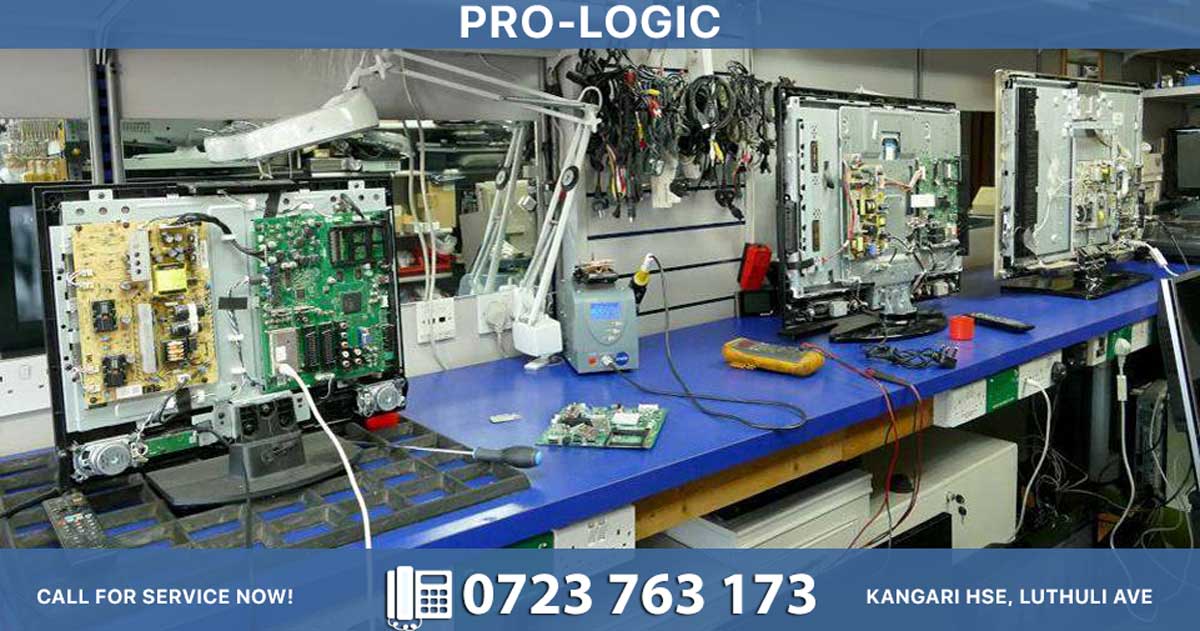
Vertical or Horizontal Lines Appearing on a TV Screen
Few faults are as distracting as lines running across or down your television screen. Whether they appear as thin coloured streaks, thick black bands, or jagged distortions that come and go, lines on a TV screen almost always point to an internal hardware issue that worsens with time. Nairobi homeowners who notice this problem should understand its causes before deciding on a repair.
The most frequent cause of vertical lines is a faulty T-Con board, the timing control board that instructs the panel how to render each row and column of pixels. When the T-Con board begins to fail, columns of pixels misfire, producing permanent or intermittent vertical lines. Horizontal lines, by contrast, are more often linked to the panel's ribbon cables or, in some cases, the line scan drivers bonded to the display glass itself.
A second common cause is a damaged or poorly seated flex cable. The flat ribbon cables that carry signals from the main board to the panel can loosen because of heat cycles, physical knocks during wall mounting, or transport damage. In such cases, lines may appear only when the casing flexes, which is a strong indication that a cable, rather than the panel, is at fault.
Third, the LVDS cable, the bundled lead connecting the main board to the T-Con board, can degrade. Corroded or bent pins on this cable produce flickering lines, colour distortion, or a split image. This is a relatively inexpensive fix when diagnosed early.
Fourth, panel damage itself can cause lines. If the television has been dropped or struck, the thin glass substrates inside the LCD or OLED panel can crack invisibly, resulting in lines that no board replacement can cure. A technician can confirm this with a pattern test.
Fifth, software glitches occasionally mimic hardware faults. An outdated firmware version or a faulty input source, such as a damaged decoder or streaming stick, can inject lines into the picture. Testing the TV with a different source and performing a factory reset helps rule this out before opening the set.
Finally, power surges, which are common on the Kenyan grid, can spike through the delicate driver circuits and damage them, leaving permanent lines. Using a stabiliser protects against recurrence.
It is worth understanding the repair economics before committing. A T-Con board replacement typically costs a fraction of a new television, while a panel replacement often approaches the price of a budget set, so accurate diagnosis protects your wallet as much as your screen. Lines that appear suddenly after a storm or a power interruption also deserve a full power board inspection, because surge damage rarely stops at a single component, and untreated boards fail again within months.
If you have tested alternate sources and the lines persist, the fault lies inside the television and requires professional diagnosis. Nairobi residents should contact televisionrepair.co.ke, a trusted workshop on Luthuli Avenue staffed by experienced technicians who repair T-Con boards, replace LVDS cables, and resolve panel-level faults on all major brands, including Samsung, LG, Sony, TCL, and Hisense. Genuine replacement parts and reasonable prices are guaranteed. To book a repair or request a free cost estimate, call 0723763173 today.
2. Discolored Patches or Spots on a TV Screen
Discolored patches, blotches, or spots on a television screen can ruin an otherwise perfect picture. These marks may appear as pink clouds, green stains, yellowish corners, or shadowy blotches, and they often grow more noticeable over weeks or months. For Nairobi households, understanding what causes these patches is the first step toward an effective repair.
The leading cause of discolored patches is uneven pressure on the panel. LCD televisions are built from layered glass and polarising films that are only millimetres thick. If a TV is transported lying flat, squeezed against a wall mount, or nudged by children or furniture, the layers can deform, producing permanent pressure marks that show as colour blotches. This is why technicians always insist televisions be moved upright.
A second cause is backlight bleed or clouding, where the LED backlight shines unevenly through the panel. Local dimming zones that fail can leave bright or discoloured patches that are most visible in dark scenes. Replacing the affected LED strips usually cures this.
Third, magnetisation can cause discolouration on older CRT televisions, and although modern flat panels are largely immune, nearby unshielded speakers can still distort colours on some sets. Moving speakers and other magnetic devices away from the TV is a quick test.
Fourth, polariser and panel delamination cause spots with a hazy, oily appearance. Excessive heat, direct sunlight through a window, or high humidity, all common in Nairobi homes, accelerate the breakdown of the polarising films, resulting in spotty or rainbow-tinged areas.
Fifth, a failing main board or T-Con board can inject incorrect colour data to sections of the screen, producing tinted patches that shift as the image changes. Board-level repair or replacement resolves this reliably.
Finally, liquid ingress is surprisingly common. Cleaning sprays applied directly to the screen can seep past the bezel and leave permanent stains behind the glass. Screens should always be cleaned with a lightly dampened microfiber cloth sprayed away from the set.
Two further checks help narrow the diagnosis before you spend anything. First, photograph the patches with the TV displaying a plain white screen and then a plain grey screen; blotches that appear on both patterns, in exactly the same positions, are physical faults within the panel or its optical layers, while marks that shift with the content are processing or signal issues. Second, observe the behaviour over a week: pressure marks and polariser damage remain perfectly static, whereas backlight-zone and board faults flicker, drift, or intensify as the set warms. Sharing these observations with your technician shortens the diagnosis considerably and reduces your labour costs, because the fault arrives already half-localised.
If a pattern test or picture reset does not clear the discolouration, internal repair is required. For professional attention, Nairobi residents are advised to visit televisionrepair.co.ke. The workshop on Luthuli Avenue specialises in diagnosing and repairing discoloured patches, backlight faults, and panel issues on all major television brands, using genuine parts at fair prices. Call 0723763173 to speak with a qualified technician or to arrange a repair today.
3. Dying Pixels: Black Dots on a TV Screen
Small black dots scattered across a television screen are more than a cosmetic nuisance. Known as dead or dying pixels, these unresponsive points refuse to light up no matter what is displayed, and they tend to multiply as a television ages. Nairobi residents who spot these dots should understand why they appear and what can realistically be done about them.
A pixel dies when one of its three sub-pixels, red, green, or blue, stops receiving or responding to electrical signals. The most common cause is a transistor failure within the thin-film transistor array that drives the panel. Modern 4K screens contain over eight million pixels, each governed by its own microscopic transistor, and even a tiny manufacturing defect rate produces a few dark dots over time. Age simply increases the odds of failure.
A second cause is panel ageing and heat stress. Televisions mounted near windows, above fireplaces, or in enclosed cabinets run hotter than intended. Sustained heat accelerates transistor degradation, and clusters of dead pixels often first appear in the warmest corners of the screen. Nairobi homes with direct afternoon sunlight should take particular care.
Third, physical impact can kill pixels instantly. A knock from a remote control, a thrown toy, or pressure during transport can rupture the tiny connections feeding individual pixels, leaving permanent black pinholes. Pressure marks sometimes first show as dark or bright spots before the pixels die completely.
Fourth, voltage irregularities contribute to pixel death. The Kenyan power grid is prone to surges and brownouts, and unstable current stresses the panel driver circuits. Over time, weak transistors fail, and dots appear. A quality stabiliser or surge protector is inexpensive insurance.
Fifth, manufacturing defects, known from the factory, sometimes surface after the warranty period. Manufacturers tolerate a small number of defective pixels per panel, so a few dots that appear in the first months are often considered normal. However, spreading clusters or dots accompanied by lines indicate progressive panel failure.
Finally, in rare cases, software can mimic dead pixels. Frozen picture elements from a stuck app or a decoder fault can masquerade as dots. Playing a fast-moving full-screen video confirms whether the dots move with the content or remain fixed on the glass.
A practical self-test distinguishes dead pixels from the many imitators. Pause a bright, fast-moving video and look closely at the dots. If they shift with the picture, they are content artefacts or decoder faults, not hardware. If they remain anchored while everything else moves, display full-screen red, green, and blue test images in turn: a pixel invisible on every colour is truly dead, while a pixel that survives on one or two colours is merely stuck and may respond to gentle massage with a microfiber cloth or a cycling repair video. Recording the number and location of the dots each week also establishes whether the fault is stable or spreading, information that directly determines whether a panel replacement is justified.
Remedies such as pixel-fixing videos, gentle screen massage, or JScreenFix-style apps occasionally revive stuck, but not truly dead, pixels. Permanent black dots require panel-level attention. For diagnosis and repair in Nairobi, visit televisionrepair.co.ke on Luthuli Avenue, where experienced technicians assess pixel faults, replace panels where economical, and advise honestly when repair offers better value than replacement. All work is done using genuine parts at reasonable prices. Call 0723763173 for a free assessment and professional guidance today.
4. Image Retention and Burn-In on Modern TVs
Image retention and burn-in occur when a static image, such as a channel logo, news ticker, or video game interface, leaves a visible ghost on the screen long after the content changes. While temporary retention usually fades within minutes, permanent burn-in is a genuine hardware concern, particularly for owners of OLED, QLED, and plasma televisions in Nairobi.
Burn-in develops when individual pixels age unevenly. OLED panels generate their own light, meaning that pixels displaying bright static elements wear faster than their neighbours. After hundreds of hours of the same logo, the affected pixels lose brightness permanently, leaving a faint but stubborn shadow. The phenomenon is cumulative, which is why news channels with fixed banners and gamers with static heads-up displays are the most affected users.
A second contributor is high brightness combined with static content. Running a television at maximum backlight while displaying unchanged graphics dramatically accelerates pixel wear. Nairobi living rooms with strong ambient light often push owners into these settings without realising the cost.
Third, panel technology matters. LCD and QLED sets, which use backlights behind liquid crystal shutters, rarely suffer true burn-in; what appears is usually temporary image retention that disappears after a rest or a pixel-refresh cycle. OLED and older plasma panels are genuinely susceptible. Correctly identifying the panel type determines whether the condition is reversible.
Fourth, ageing panel drivers can exaggerate retention. If the pixel-shift and logo-dimming features built into modern televisions malfunction, the protection intended to prevent burn-in silently stops working, and ghosts appear far sooner than expected.
Fifth, firmware issues occasionally cause false burn-in. A buggy software update can freeze compensation cycles, causing retained images that a manual refresh will clear. Running the built-in panel refresh function and updating firmware should always be tried first.
Finally, showroom display units, or second-hand TVs previously used for signage and menus, frequently arrive with pre-existing burn-in. Buyers of imported and used sets in Nairobi should inspect the screen with full-screen grey and white test patterns before purchase.
Honest expectations matter when evaluating a burn-in repair. Unlike a flickering power board, a burned pixel cannot be restored to factory brightness; the wear is physical and permanent. However, professional calibration can substantially reduce the visibility of mild ghosts by rebalancing brightness across the panel, and in some OLED sets the compensation-cycle settings can be reset and re-run to even out the wear pattern. The key decision is economic: a calibration service costs a fraction of a replacement panel, so having a technician measure the severity before choosing between the two options is always worthwhile.
Prevention is straightforward: enable pixel shift and logo brightness reduction, avoid leaving static images for hours, lower the backlight for routine viewing, and run the manufacturer's refresh cycle monthly. Where ghosts persist despite these measures, professional panel assessment is required. Nairobi owners should contact televisionrepair.co.ke, the trusted television repair workshop on Luthuli Avenue, for accurate diagnosis and repair of burn-in and retention faults on all major brands. Call 0723763173 to speak with a qualified technician today.
5. TV Screen Takes Longer Than Usual to Turn On
A television that once powered on instantly but now takes thirty seconds, a minute, or longer to display a picture is displaying a classic warning sign. Nairobi residents often tolerate the delay until it becomes unbearable, yet the slow start usually points to failing components that are far cheaper to fix early than after a complete breakdown.
The leading cause of delayed power-on is ageing electrolytic capacitors on the power supply board. Capacitors store the charge needed to kick-start the backlight and main board. As they dry out and lose capacitance, the TV must cycle repeatedly before enough charge accumulates to start, producing the familiar slow or multiple-attempt start. Bulging or leaking capacitors are visible evidence, and replacing them early is one of the most affordable repairs in television service.
A second cause is a weakening backlight system. LEDs that are failing demand more current to strike, and the TV's protection circuit delays start-up while it retries. Often the slow start is accompanied by a brief flicker or dimness before the picture stabilises, which confirms the backlight is struggling.
Third, firmware corruption can slow boot times. Smart televisions load an operating system at start-up, and corrupted software or an overfull memory causes extended boot sequences, sometimes with the logo hanging on screen. A factory reset or a clean firmware reinstallation resolves this without touching the hardware.
Fourth, a failing main board lengthens start-up. The main board acts as the television's computer; when its memory chips or processors degrade, boot-up drags, and the set may respond sluggishly to the remote as well.
Fifth, cold solder joints, common in sets exposed to heat and vibration, expand and contract with temperature. Many owners notice the delay is worse in the morning when the set is cold, and improves after the TV warms up. This thermal pattern is a strong indicator of board-level solder faults, which a technician can remedy by reflowing the affected joints.
Finally, unstable mains voltage stretches start-up times because the power board cannot reach its trigger thresholds quickly. Nairobi homes on lines prone to brownouts should install a voltage stabiliser, which protects both the television and the repair budget.
A useful diagnostic habit is timing the start-up over several weeks. Note how many seconds elapse between pressing the power button and the picture appearing, whether the delay is worse when the set is cold, and whether any flicker or dimness accompanies the start. A delay growing by a few seconds each month, particularly with morning cold-starts, is the clearest possible indication of drying capacitors, and it gives you the opportunity to schedule a low-cost board repair on your own terms rather than an emergency replacement after total failure.
A slow-starting television should never be ignored, because the underlying fault almost always progresses to a complete failure to power on. For prompt, professional service, Nairobi residents should contact televisionrepair.co.ke on Luthuli Avenue. Their technicians specialise in power board repairs, capacitor replacement, and backlight diagnostics on all major brands, at reasonable prices and with genuine parts. Call 0723763173 to book a repair today.
6. Delay Between Changing Channels on a TV
A sluggish response when changing channels is a complaint many Nairobi television owners endure silently. Where switching once took a second, the screen may now freeze, go black, or display a "no signal" moment for several seconds before the next channel appears. Understanding the causes helps separate benign software behaviour from developing hardware faults.
The first and most common cause is the natural signal processing time of digital television. Modern sets must decode an entirely new digital stream each time you change channels, and this legitimately takes one to three seconds. However, when the delay stretches to five seconds or more, the set is struggling beyond its design.
A second cause is weak or unstable signal reception. Aerials, decoders, and satellite dishes around Nairobi suffer from corrosion, misalignment after storms, and interference from new construction. When the incoming signal is marginal, the television repeatedly re-locks the channel, extending every change. Checking the signal strength meter in the TV menu reveals whether reception is the culprit.
Third, ageing memory chips slow channel switching. The processor buffers each channel stream in RAM, and degraded memory forces repeated reloads. Owners of sets older than five years who notice general sluggishness, from menus to apps, likely have board-level memory issues that worsen over time.
Fourth, software bloat on smart televisions consumes processing power. Accumulated apps, cached data, and an outdated operating system starve the tuner of resources. A factory reset, clearing the app cache, and installing the latest firmware frequently restores snappy channel changes.
Fifth, an overheating processor throttles performance. Televisions mounted flush against walls, inside entertainment units, or near sunny windows run hot, and the CPU deliberately slows itself to protect the chips. Nairobi afternoons can push an enclosed set well past its thermal comfort zone. Improving ventilation often restores normal speed.
Sixth, a failing power supply injects instability into the tuner and processor. If the delay is accompanied by flicker, dimming, or the set occasionally restarting, the power board deserves professional inspection.
Finally, external devices such as decoders, media players, or gaming consoles connected via HDMI can introduce switching delays of their own, especially with HDMI-CEC features enabled. Testing the TV's built-in tuner directly isolates whether the fault lies with the television or the accessories.
Before concluding the set is faulty, perform one structured test: disconnect every external device, use the TV's own tuner with the strongest local channel, and time five consecutive channel changes. Then connect a single alternate source, such as a USB drive or console, and test again. Consistent slowness on the internal tuner but snappy performance elsewhere points to the tuner or its supporting circuits, while uniform slowness on every input points to the main board, memory, or thermal throttling. This two-minute procedure converts a vague complaint into precise information your technician can act on immediately.
Persistent, worsening channel-change delays deserve professional diagnosis. For Nairobi residents, televisionrepair.co.ke on Luthuli Avenue offers expert assessment and repair of tuners, main boards, and power supply faults on all major television brands, including Samsung, LG, Sony, TCL, and Hisense. Their technicians use genuine parts, charge reasonable prices, and provide honest advice on whether repair or adjustment best serves you. Call 0723763173 to arrange a diagnostic today.
7. TV Shuts Down Randomly by Itself
A television that switches itself off mid-programme is more than an inconvenience; it is a safety warning. Random shutdowns, whether they occur after minutes or hours of viewing, almost always indicate a component that is failing and triggering the set's built-in protection circuits. Nairobi owners should identify the pattern and seek repair before the fault escalates.
The most frequent cause is overheating. Televisions accumulate dust inside their vents, block airflow when mounted flush against walls, and cook themselves inside enclosed cabinets. When the internal temperature crosses safe limits, the thermal protection circuit cuts power without warning. Shutdowns that occur after a consistent period of viewing, and that become more frequent during hot afternoons, point squarely at heat.
A second common cause is a failing power supply board. Cracked solder joints, bulging capacitors, and drifting voltage regulators cause intermittent power loss. Owners often notice the shutdowns coincide with bright scenes, which draw maximum current and expose the weak board. This is a repair best performed early, because a collapsing power board can damage the main board as it fails.
Third, faulty backlight systems trigger protection shutdowns. When LED strips short or the inverter misbehaves, the television deliberately powers off to prevent fire or further damage. A tell-tale sign is a momentary flicker or dimming immediately before the set dies.
Fourth, main board and firmware failures cause random reboots and shutdowns. Corrupted software can crash the operating system at unpredictable intervals, while a degrading main board loses control of the power sequencing. Updating or reinstalling firmware rules out the software cause.
Fifth, external factors in the Kenyan environment contribute significantly. Voltage sags from the national grid, overloaded extension sockets shared with heaters and kettles, and ageing surge protectors can all cut power to the set. Plugging the television directly into a known-good wall socket, ideally through a stabiliser, isolates this cause.
Sixth, remote control interference or a stuck power button occasionally mimics shutdown faults. A jammed physical power switch, a failing remote sending spurious power commands, or even a neighbouring universal remote can switch sets off mysteriously. Removing the remote's batteries for a day confirms or clears this suspicion.
Finally, aging internal cabling and connectors, disturbed by transport or vibration, break contact intermittently and drop the set into standby.
Keeping a shutdown log pays dividends. Record the time of day, how long the set had been running, the room temperature, what was on screen, and whether the power light changed state afterward. Shutdowns that cluster after a consistent running time point to heat; shutdowns that track with bright scenes point to the power supply; shutdowns that occur regardless of conditions point to the main board. Presenting this log to your technician typically cuts diagnosis time in half, and the saved labour is reflected directly in your final bill.
Random shutdowns should never be ignored, because the underlying fault frequently ends in a complete failure to start. Nairobi residents should contact televisionrepair.co.ke, the professional workshop on Luthuli Avenue, for expert diagnosis and repair of shutdown faults on all major television brands. Genuine parts, reasonable prices, and experienced technicians are guaranteed. Call 0723763173 to book a repair today.
8. TV Will Not Turn On Consistently
Perhaps no fault is more frustrating than a television that turns on some days and refuses on others. Owners press the power button, see the standby light blink or glow, hear a click, and yet receive no picture. Intermittent start behaviour is a hallmark of components on the edge of failure, and Nairobi households should treat it as a prompt for professional repair.
The primary cause is the power supply board. Electrolytic capacitors degrade with heat and age, losing their ability to hold the charge that starts the set. When the television is cold, the degraded capacitors perform at their worst, which explains why many sets refuse to start in the morning but work after several attempts or later in the day. Replacing capacitors is among the most affordable television repairs.
A second cause is failing LEDs in the backlight. Modern edge-lit and direct-lit panels shut down when the backlight draws abnormal current. The television may briefly flash the logo, then go dark, as protection circuits cancel the start-up. Listening for faint clicks or seeing the standby light change colour helps a technician pinpoint this quickly.
Third, cold and cracked solder joints cause inconsistent starts. Thermal cycling in Nairobi's varying indoor temperatures expands and contracts joints on the power and main boards until contact becomes intermittent. Sets that start reliably after warming up display the classic thermal signature of solder faults.
Fourth, a failing main board prevents consistent start-up. The main board instructs the power board to fire the backlight and panel. When its standby circuitry degrades, the television hangs in standby indefinitely. Blown standby regulators are a common and repairable fault.
Fifth, the remote control and input switches can be to blame. A stuck power key, dirty contact, or a remote that transmits unreliably leaves owners believing the set is faulty when the issue is external. Testing with the television's physical buttons and with fresh remote batteries rules this out first.
Sixth, unstable mains supply undermines start-up. Low voltage during peak hours on some Nairobi lines leaves the power board below its trigger threshold. A voltage stabiliser frequently cures inconsistent starts in affected homes.
Finally, ageing surge protectors and extension leads that appear functional but deliver poor contact should be eliminated by plugging the set directly into the wall.
Note also what the standby light does during a failed start, because it is the television's own error reporting system. A light that blinks a repeated number of times, for instance three blinks followed by a pause, encodes a specific internal fault that a technician can read directly from the service manual. A light that glows steadily while the screen stays black points to the backlight rather than the power board. A light that never appears at all points to the power supply. Passing this single observation to your repairer frequently identifies the faulty board before the set is even opened.
Where basic checks fail, the set requires internal diagnosis and repair. Nairobi residents should visit televisionrepair.co.ke on Luthuli Avenue, where experienced technicians resolve intermittent start-up faults daily, using genuine replacement parts and charging reasonable prices for all major brands. Call 0723763173 for prompt, professional assistance.
9. Distorted or Warped Images on a TV Screen
A warped, stretched, or distorted picture can make a television unwatchable. Faces may appear elongated, straight lines may bow, the image may pull to one side, or sections of the picture may ripple as though the screen were liquid. For Nairobi viewers, distortion is a fault with several distinct causes, each pointing to a different repair.
The first and simplest cause is an incorrect aspect ratio or picture mode. Wide, zoom, stretch, and cinema modes manipulate the image to fill the screen, distorting content that was produced in a different ratio. Checking that the aspect ratio is set to "original" or "auto" should be the first troubleshooting step for any distorted picture.
A second cause is a faulty T-Con board. The timing control board synchronises the panel's row and column drivers. When it fails, the image can tear, ripple, skew, or double before freezing entirely. Distortion accompanied by lines or frozen frames strongly suggests T-Con failure, a repair that is far cheaper than panel replacement.
Third, degraded LVDS cables distort the signal path between the main board and the panel. Bent pins, corrosion, or a cable partially unseated after wall mounting produce warping, colour shifts, and intermittent image breakup, often when the set warms up and the cable expands.
Fourth, failing panel drivers create localised warping. The chip-on-glass drivers bonded to the panel edges control entire regions of the display. A single failing driver can stretch one side of the picture or cause ripple bands that no external adjustment will cure.
Fifth, signal and source problems frequently masquerade as television faults. A failing decoder, a damaged HDMI cable, a weak aerial signal, or an over-compressed streaming feed all deliver distorted pictures that the television faithfully displays. Testing a different source and cable isolates whether the fault is internal or external.
Sixth, magnetic interference distorts images on CRT sets and, rarely, on nearby unshielded equipment. Moving speakers and subwoofers away from the screen is a quick, zero-cost test.
Finally, firmware glitches occasionally corrupt the image-processing pipeline, producing stretching or smearing that a factory reset clears.
A final word on cost expectations is useful before booking. T-Con board replacement, LVDS cable replacement, and LVES connector reseating are all inexpensive, board-level jobs measured in thousands of shillings rather than tens of thousands, and they cure the majority of warping and tearing complaints. Driver-on-glass faults, by contrast, are genuine panel faults, and the honest answer is usually that a replacement television offers better value. The diagnostic step exists precisely to separate these outcomes early, and any workshop that opens with a panel diagnosis without testing the boards first should be treated with caution.
Persistent geometric or rippling distortion after external causes are excluded demands professional board-level diagnosis. Nairobi residents should contact televisionrepair.co.ke, the trusted repair workshop on Luthuli Avenue, for accurate assessment of T-Con, cable, and panel-driver faults on all major television brands. Their experienced technicians use genuine parts and offer reasonable prices with honest repair-versus-replace guidance. Call 0723763173 to schedule a repair today.
10. TV Colors Look Washed Out
A washed-out picture, where colours appear pale, greys dominate, and dark scenes look foggy or milky, robs a television of its impact. Nairobi owners who once enjoyed vivid images often adjust settings endlessly before realising the fault may lie deeper. Understanding the causes of a faded picture guides the correct fix.
The first and most common cause is incorrect picture settings. Modes such as "eco," "energy saving," or "standard" deliberately reduce contrast, dim the backlight, and flatten colours. A quick switch to "movie," "cinema," or "natural" mode, followed by raising the backlight and contrast, restores most washed-out pictures within minutes.
A second cause is a failing backlight. As LED strips age, they dim and shift colour temperature, leaving images pale and washed out, particularly in corners. A set that also flickers, dims intermittently, or shows dark patches alongside the washed-out look likely needs backlight replacement.
Third, a degraded power supply starves the backlight. Weak capacitors deliver lower voltages than the LEDs require, producing a permanently pale picture that no setting can correct. This is a board-level repair that restores brightness fully.
Fourth, faulty picture processing on the main board can drain colour. The image processor interprets and renders every frame, and when its memory or processing circuits degrade, saturation collapses and greys bleed into shadows. Accompanying symptoms include sluggish menus and random reboots.
Fifth, HDMI and cable faults wash out colour. A damaged HDMI cable, a loose connector, or a failing port can drop colour data, leaving a pink, grey, or faded tint. Swapping cables and ports is an essential diagnostic step. Similarly, a decoder or media player outputting an incorrect colour space, such as RGB versus YCbCr mismatches, produces pale images on an otherwise healthy television.
Sixth, panel ageing gradually washes out colours. Polariser films and liquid crystals degrade with heat and UV exposure, and sets mounted opposite uncurtained Nairobi windows fade fastest. Nothing but a panel replacement reverses true panel wear, which is why ventilation and shade preserve picture quality.
Seventh, source quality matters. Low-resolution broadcasts, heavily compressed streams, and upscaled content naturally look flat compared with native 4K material. Testing a high-quality source confirms whether the television or the content is at fault.
Finally, a loose internal LVDS connection between the main board and the panel can intermittently desaturate the picture, especially as the set warms.
To test scientifically, display a bright full-white image for a few minutes each week and observe how quickly the screen reaches full brightness. A healthy set achieves full illumination within a second or two. A set that lags, warms up slowly, or shows brightness creeping in from the centre outward is displaying early backlight or power weakness, and that weekly observation gives you weeks of warning before the eventual failure.
Where settings, cables, and sources have been checked and the picture remains pale, internal repair is required. For professional diagnosis, Nairobi residents should contact televisionrepair.co.ke, the established workshop on Luthuli Avenue. Their experienced technicians repair backlight and power supply faults on all major brands using genuine parts at reasonable prices. Call 0723763173 today to restore your television's colour.
11. TV Colors Are Oversaturated or Wrong
When a television displays overly vivid, unnatural colours, or worse, completely wrong hues such as green faces, purple skies, or red-tinged whites, the viewing experience collapses. Nairobi residents facing garish or incorrect colours can trace the fault to a handful of well-understood causes.
The first cause is simply aggressive picture settings. Vivid and dynamic modes intentionally oversaturate colours for showroom floors. If your set displays cartoonishly intense colours, switching to movie or natural mode and lowering the colour saturation often resolves the issue instantly.
A second cause is a faulty T-Con or main board colour-processing circuit. When the colour decoder fails, hues shift dramatically, and familiar content takes on impossible tints. If the colour error appears on every source and survives a factory reset, internal processing hardware is the likely culprit.
Third, HDMI colour-space mismatches produce wrong colours. When a decoder, console, or streaming stick outputs a format the television interprets differently, such as RGB full versus limited range, images appear washed out or crushed. Toggling these settings on both devices frequently cures mystery colour faults.
Fourth, a failing LVDS cable distorts the colour data travelling to the panel. Corroded pins or a loosened connector after wall mounting can shift entire colour channels, producing pink, green, or blue casts. These faults often change as the set warms, which is a strong clue for the technician.
Fifth, panel polariser degradation alters colour rendering. Heat, humidity, and sunlight exposure, all common in Nairobi homes, gradually break down the polarising films, giving the picture a tinted, stained, or unevenly coloured appearance that worsens over years.
Sixth, magnetic interference distorts colours on CRT televisions and some older flat panels. Unshielded speakers, subwoofers, or transformers placed beside the screen tint the display. Moving them away is a free and immediate test.
Seventh, decoder and broadcast faults deliver wrong colours from outside the television. A failing set-top box, an ageing aerial connection, or a corrupted signal can strip or shift colour information, making the set appear faulty. Connecting a different source, such as a USB drive with known-good video, isolates the fault conclusively.
Finally, one-sided colour faults, where only half the screen shows wrong hues, indicate panel driver or ribbon failure requiring skilled board-level work.
A systematic isolation routine brings clarity within minutes and costs nothing. Test the same content through three different paths: the internal tuner, a USB drive, and an external HDMI device. Wrong colours on all three paths are internal to the television; wrong colours on only one path point to that specific input, cable, or source device. Then photograph the screen showing a flesh tone, a white wall, and a colour bar pattern, and compare the results side by side. A technician given these photographs and the results of your input test can often quote the exact repair before you bring the set in.
Where external causes are excluded, professional diagnosis is essential, since colour circuitry is delicate. Nairobi residents should visit televisionrepair.co.ke on Luthuli Avenue, where qualified technicians diagnose colour faults accurately and repair boards using genuine parts at reasonable prices for all major brands. Call 0723763173 to book an assessment today.
12. Double Images or Ghosting on a TV Screen
Ghosting, where a faint duplicate image trails behind moving objects, or true double images, where two complete pictures overlap, transforms an enjoyable screen into an eyestrain. Nairobi television owners encounter this fault for several distinct reasons, and identifying the correct cause determines whether the fix costs nothing or requires board-level repair.
The first cause of trailing ghosting is motion blur inherent to LCD technology. Slow pixel response times, particularly on budget panels and older sets, leave smears behind fast-moving footballs and action scenes. Enabling motion interpolation features, often branded Motionflow, TruMotion, or Auto Motion Plus, reduces this natural limitation.
A second cause is signal reflection, common with analogue-era aerial faults that persist in digital reception as echo-induced picture corruption. A poorly aligned aerial, damaged cable, or water in the antenna connection causes multiple signal paths to arrive at slightly different times, creating genuine double images on broadcast content. Inspecting and re-terminating aerial cabling, or having it professionally realigned, cures this.
Third, a faulty T-Con board produces doubled or overlapping frames. When the timing controller loses synchronisation, the panel renders frames out of order or partially overlapping. Ghosting accompanied by vertical lines, image freezing, or distortion that worsens with heat points strongly to T-Con failure.
Fourth, a failing LVDS cable corrupts data between the main board and panel, causing smearing, shadow copies, and intermittent double images that often shift when the set warms or the casing is gently flexed.
Fifth, game console and decoder video processing injects ghosting from outside the television. Over-processing features such as aggressive noise reduction on set-top boxes smear movement. Disabling these on the source device, and testing a different input, isolates external causes quickly.
Sixth, panel ageing contributes to ghost-like artefacts. As liquid crystal response degrades with years of heat exposure, trails lengthen and transitions smear. Sets mounted near sunny Nairobi windows age fastest. Nothing short of panel replacement cures true pixel-response wear.
Seventh, HDMI cable faults deliver corrupted data that manifests as ghosting and sparkle artefacts. A damaged or excessively long cable running past interference sources deserves replacement with a quality, properly shielded lead.
Finally, incorrect sharpness and noise-reduction settings exaggerate trailing edges. Excessive sharpness creates halos around objects that mimic ghosting; resetting picture settings to defaults provides an immediate test.
Distinguishing the three types of ghosting is the most valuable diagnostic step you can perform. Signal-path ghosting produces a faint duplicate offset horizontally, fixed in position, present only on broadcast content. Motion-blur ghosting produces a short smear trailing moving objects only, never visible on static images. Board-level ghosting produces overlapping frames, torn edges, or shadows that persist across every source. Watch a slow panning shot and a fast-moving football match on two different inputs, and note which fault appears in which condition. That observation, relayed to your technician, localises the fault to the aerial, the panel's pixel response, or the T-Con board respectively.
If ghosting persists across all sources, cables, and settings, internal repair is required. Nairobi residents should contact televisionrepair.co.ke, the professional television workshop on Luthuli Avenue, where experienced technicians diagnose T-Con, cabling, and panel faults on all major brands, using genuine parts and reasonable prices. Call 0723763173 to arrange a repair today.
13. Flashing or Strobing Backlight on a TV
A backlight that flashes, strobes, or pulses rapidly is one of the most distressing television faults, and prolonged viewing of a strobing screen can cause genuine eye strain and headaches. Nairobi owners experiencing this problem should switch off the set promptly and understand the causes before continued use compounds the damage.
The leading cause of a strobing backlight is failing LED strips. As individual LEDs within the panel age, their resistance drifts, and the current through the strip becomes unstable. The driver circuit responds by pulsing, producing rapid flashing that often affects the entire screen. This fault always progresses, and continued operation stresses the driver board.
A second cause is a faulty backlight inverter or LED driver circuit. The driver regulates current precisely; when its components degrade, the current oscillates, and the backlight strobes in sympathy. Drivers frequently fail as a knock-on consequence of ageing LEDs, so a complete backlight service addresses both together.
Third, degrading power supply capacitors supply unstable voltage to the backlight system. A weak power board delivers a rippling current that the backlight faithfully converts into visible pulsing. Sets that strobe more after warming up typically display this power-side signature.
Fourth, software features can mimic strobing. Motion-interpolation features and backlight-scanning technologies deliberately pulse the backlight hundreds of times per second; on some units, a firmware bug makes this pulsing visible. Also, automatic brightness sensors in eco modes can oscillate, brightening and dimming in a slow cycle under particular room lighting. Disabling these features, and updating firmware, rules out software causes.
Fifth, loose internal connectors flash intermittently. The backlight cables and their seating on the driver board can loosen with thermal cycling or after transport, creating flicker that changes when the set is gently moved.
Sixth, external dimmer circuits interact badly with some televisions. Where a set shares a socket with a dimmer-controlled lamp or a fan speed controller, electrical noise can pulse the backlight. Plugging the television into a clean, direct wall socket isolates this.
Finally, unstable mains voltage on some Nairobi lines, particularly during peak hours, can pulse the backlight. A voltage stabiliser protects the set and frequently smooths the picture.
A simple observation test narrows the fault considerably before you call anyone. Watch the strobing in a dark room and note whether the flashing is uniform across the entire screen or concentrated at the edges, and whether the rhythm is fast, like a hummingbird wing, or slow, like a lighthouse. Uniform fast strobing usually implicates the driver circuit or software dimming; edge-concentrated flashing with a slow rhythm usually implicates individual LED strings or a loose connector. Reporting these two observations, position and rhythm, to a technician over the telephone often permits an accurate estimate before the set is even opened.
A flashing backlight never self-heals, and every hour of strobing inflicts additional wear on the driver board. Nairobi residents should contact televisionrepair.co.ke, the trusted repair workshop on Luthuli Avenue, for professional LED backlight replacement and driver-board repair on all major television brands, using genuine parts at reasonable prices. Call 0723763173 today for a prompt diagnosis and repair.
14. Dark Corners on a TV Screen
Dark corners, where the four edges of the picture appear dimmer, shadowy, or vignette-like compared with the centre, are a fault that creeps up gradually on many LCD and LED televisions. Nairobi owners often first notice the problem during dark movie scenes, where the corners appear to swallow the image. The causes are well understood, and most are repairable.
The most common cause is uneven backlight distribution. Edge-lit televisions position LEDs along the panel's edges, and the light must be guided across the entire screen. When individual LEDs at the corners dim or fail, those regions darken. Corner shadowing that appeared suddenly, or that affects one corner more than the others, strongly suggests localised LED failure.
A second cause is pressure on the panel. Tight wall-mount brackets, warped screws, a bezel pressed against the glass, or transport damage deform the panel layers at the corners, restricting light and leaving permanent dark patches. Sets mounted in Nairobi homes with poorly fitting brackets should be checked for this mechanical cause.
Third, a weakening power supply starves the outer LEDs. The corners of a backlight array sit at the end of long electrical runs, and any voltage sag affects them first. A television with darkening corners accompanied by overall dimness or slow start-up needs its power board inspected.
Fourth, aged optical films inside the panel darken corners. Light guide plates and diffuser sheets degrade with heat over years, yellowing and losing efficiency at the edges where heat concentrates. Sets placed near sunny windows or in enclosed cabinets age fastest in Nairobi conditions.
Fifth, local dimming zone faults create dark corners on zone-dimming televisions. When the driver loses control of edge zones, they default to minimum brightness. Firmware updates occasionally restore zone control, making a software check worthwhile before hardware service.
Sixth, loose internal backlight connectors at the panel edges reduce current to corner LED strings. This fault frequently worsens as the set warms and the connections expand, and a technician can reseat or repair the affected connector.
Seventh, some dark corners are simply the panel's design limitation. Entry-level edge-lit sets exhibit mild corner shadowing from the factory, and reviews often note it. Comparing the screen with a full-white test image distinguishes uniform, symmetric factory shadowing from asymmetric, progressive fault shadowing.
Finally, accumulated dust inside the cabinet, drawn in by cooling airflow over years, settles on the optical layers near vents and dims adjacent areas. Professional cleaning during backlight service restores clarity.
A useful confirmation test takes one minute. Display a plain grey screen and look at the corners from directly in front of the set, then from a sharp side angle. If the corners appear dark from straight ahead but brighten when viewed from the side, the light is reaching the corners and the fault is in the liquid crystal layer or a dimming-zone controller. If the corners stay dark from every angle, the light itself is not arriving, confirming LED or power-side failure.
If adjusting the backlight setting and updating firmware does not clear the corners, internal repair is required. Nairobi residents should contact televisionrepair.co.ke, the professional workshop on Luthuli Avenue, where experienced technicians replace faulty LED strips, repair power boards, and restore even brightness on all major television brands using genuine parts at reasonable prices. Call 0723763173 to book a diagnostic today.
15. Uniform Brightness Issues and Clouding on a TV Screen
Clouding describes irregular, cloudy patches of brightness visible when a television displays dark or black content, and uniform brightness issues cover the broader family of uneven illumination faults. For Nairobi film lovers, these defects turn night-time movie scenes into a mottled grey mess. The causes span manufacturing, ageing, and environment.
The first cause is inherent panel quality. All VA and IPS LCD panels exhibit some clouding because the backlight cannot be perfectly diffused across a large glass surface. Mild, stable clouding visible only in dark rooms is a characteristic of the panel rather than a fault. Significant, worsening, or asymmetric clouding, however, indicates a developing problem.
A second cause is degraded backlight uniformity. As LED strips age unevenly, some regions of the screen receive more light than others, producing bright clouds or dark pools that intensify over months. Sets running at maximum backlight settings age fastest, since their LEDs are driven hardest.
Third, mechanical pressure deforms the panel layers and creates both clouds and dark patches. Wall-mounting with over-tightened brackets, a bezel pressing the glass, or objects resting against the screen distort the liquid crystal layer, yielding permanent blotches. Suspending the set correctly, and loosening excessive bracket torque, prevents progression.
Fourth, panel bowing from heat produces uniformity faults. Televisions mounted directly above heat sources, opposite uncurtained windows, or inside poorly ventilated cabinets warp slightly, and the bowed areas light unevenly. Nairobi's strong afternoon sun makes window-facing installations particularly vulnerable.
Fifth, backlight bleed at the panel edges often accompanies clouding. Where the LED frame meets the bezel, light escapes unevenly, illuminating corners during dark scenes. Refitting or replacing the panel's sealing and frame assemblies reduces this.
Sixth, firmware and local-dimming malfunctions exaggerate clouding on zone-dimming televisions. When zone control fails, uneven areas light incorrectly. A factory reset and firmware update cost nothing and occasionally restore uniform control.
Seventh, temperature swings flex the panel and temporarily worsen or improve clouding. Owners who notice the clouds change from morning to evening are observing thermal expansion of the panel layers, which confirms a structural rather than electronic cause.
Finally, accumulated internal dust settling on the light guide plate adds new dim patches over years of operation, and professional cleaning during a backlight service resolves them.
To document the fault professionally, photograph the screen in a dark room while it displays a black test image, then repeat with a dark grey one, and date the photographs. Comparing pictures taken a month apart shows objectively whether the clouding is stable, which is merely a panel characteristic, or progressing, which indicates active LED or power degradation. Photographs also protect you in any warranty discussion and give your technician a baseline against which to verify the repair.
Practical mitigation includes lowering the backlight in the evening, enabling the television's light sensor, and avoiding maximum brightness for routine viewing. Where clouding is severe, asymmetric, or worsening, professional assessment is warranted. Nairobi residents should contact televisionrepair.co.ke on Luthuli Avenue, where qualified technicians diagnose and repair backlight and uniformity faults on all major brands, using genuine parts and charging reasonable prices. Call 0723763173 for an expert opinion today.
16. Buzzing or Humming Sounds From a TV
A television that buzzes or hums audibly, whether constantly or only at certain moments, distracts from any programme and frequently signals a component under stress. Nairobi owners often notice the noise most during quiet evening viewing. Understanding the sources of television hum helps determine whether a simple adjustment or internal repair is required.
The leading cause of a buzzing sound is the power supply's transformers and inductors. These copper coils vibrate slightly under normal operation, but as their lacquer adhesives age and components loosen, the vibration becomes audible as a hum or buzz. A hum that intensifies at high backlight settings confirms a power-side origin, because greater current stresses the coils.
A second cause is failing electrolytic capacitors. As capacitors dry out, they pass ripple current into surrounding coils, which convert the electrical noise into acoustic noise. Buzzing accompanied by slow start-up, flicker, or intermittent shutdown points to a power supply board needing professional recap and repair.
Third, backlight driver circuits whine and buzz when struggling. Failing LED strips force the driver into unstable duty cycles, and its inductors sing audibly. Buzzing that changes with picture brightness, louder on bright scenes and quieter on dark ones, is the classic backlight-driver signature.
Fourth, internal cooling fans, present in some larger and older models, accumulate dust on their bearings and begin to hum or grind. Fan noise that worsens over months indicates bearing wear, and replacement restores silence.
Fifth, magnetic interaction between the television and external devices can hum. Set-top boxes, speakers, and chargers stacked on or beside the set can vibrate sympathetically, especially against thin cabinet walls. Moving suspects off the television isolates the source within minutes.
Sixth, wall power quality contributes. Nairobi homes on lines with poor earthing or shared with heavy appliances can experience mains hum transmitted into the television. Plugging the set into a different socket on a separate circuit, ideally through a stabiliser, eliminates this cause.
Seventh, resonance from mounting amplifies minor internal vibration. A television mounted on a hollow wall or against a resonant cabinet acts like a speaker cabinet, magnifying otherwise harmless coil vibration. Adding rubber isolators between the set and its mount damps this.
Finally, loudspeaker faults produce their own hums. Blown or distorted speakers hum at particular volumes, and disconnecting the internal speakers through the audio menu, while routing sound to an external system, identifies speaker-origin noise.
One diagnostic exercise separates power-supply hum from backlight hum in minutes: press the menu button while the humming set is on. The menu overlays the content without changing the picture's average brightness. If the hum stays constant with the menu open, the power board is the likely source; if the hum changes when the menu's white graphic appears, the backlight driver is reacting to brightness changes and is the source.
If the buzzing persists after repositioning and testing alternate sockets, internal repair is required before the stressed components fail entirely. Nairobi residents should contact televisionrepair.co.ke on Luthuli Avenue, where experienced technicians repair power boards, backlight drivers, and audio faults on all major brands using genuine parts at reasonable prices. Call 0723763173 to book a repair today.
17. Clicking Noises When a TV Powers On
A single soft click when a television powers on is entirely normal; relays engaging and circuits energising produce a brief mechanical sound. However, repeated clicking, clicking that continues without the set starting, or loud clicks followed by silence indicate real electrical problems. Nairobi owners should recognise when this sound becomes a repair signal.
The most common cause of repeated clicking is a power supply board attempting repeatedly to start. The board sends its ready signal, hears no confirmation from the main board or backlight, and resets with an audible relay click. This cycle repeats for seconds or minutes before the set either starts or gives up. The root cause is usually degraded capacitors that cannot hold the start-up charge.
A second cause is a failing main board. The main board must acknowledge the power board's start signal within milliseconds. When its standby circuits degrade, the handshake fails, and the power board resets audibly. Clicking accompanied by a standby light that blinks in a pattern points to main board faults that a technician can repair or replace.
Third, backlight failures trigger protective clicking. When LED strips short or draw excessive current, the television shuts the backlight down and retries, each retry producing a click. Sets that click, briefly show the logo, then go dark, display this classic backlight signature.
Fourth, cold solder joints crack on the power board and interrupt start-up. The click cycle occurs more in cold morning conditions and disappears once the set warms, a thermal behaviour that confirms board-level solder faults for the technician.
Fifth, relays themselves wear out. The electromechanical relays that switch the main power have finite lifespans, and their contacts erode, chatter, and eventually weld. A worn relay clicks erratically even when the rest of the television is healthy.
Sixth, unstable mains voltage defeats the start-up thresholds. On some Nairobi lines, voltage dips during evening peak hours leave the power board clicking without reaching operating voltage. A stabiliser frequently silences this immediately.
Seventh, external accessories produce clicks of their own. Failing surge protectors and extension sockets chattering under load mimic television faults. Plugging the set directly into a known-good wall socket eliminates this possibility.
Finally, rapid temperature changes combined with humidity cause internal expansion ticks that are harmless, but recurring electrical clicking with start-up failures is not.
A useful listening routine sharpens the diagnosis before the set is opened. Note three things: whether the clicking is rhythmic, like a clock, or erratic; how many clicks precede either a successful start or silence; and whether the interval between clicks lengthens as you keep trying. Rhythmic clicking that spaces out indicates a charging circuit struggling to accumulate start-up energy, meaning capacitors. Rapid erratic clicking points to the relay itself or the relay driver transistor. A technician told this can frequently name the faulty board, quote accurately, and bring the correct parts to your home in a single visit, saving you a second call-out.
Persistent clicking should never be ignored, because each failed start cycle stresses the board further. Nairobi residents should contact televisionrepair.co.ke, the professional workshop on Luthuli Avenue, for expert power board repair, backlight replacement, and main board diagnostics on all major brands, with genuine parts and reasonable prices guaranteed. Call 0723763173 today for prompt service.
18. High-Pitched Whining From a TV
A high-pitched whine, squeal, or hiss emanating from a television is a fault that varies from barely perceptible to genuinely unbearable, particularly for listeners sensitive to high frequencies. Nairobi owners frequently report the noise grows more noticeable during quiet scenes or at night. Several distinct electrical faults produce this sound.
The most common source is coil whine from the power supply board. Transformers and inductors vibrate at switching frequencies as electricity flows through their windings. As the adhesives binding these windings age, the vibration becomes audible, producing a whine that often intensifies at higher backlight settings or during bright scenes, when current draw is greatest.
A second source is the backlight driver circuit. The LED driver operates at high frequencies, and its inductors whine when driven into unstable operating regions, frequently because of failing LED strips downstream. A whine that changes with picture brightness confirms a backlight-side origin, and replacing the aged LEDs usually silences the driver.
Third, failing capacitors shift the power supply's operating frequency into the audible range. As electrolytics degrade, the switching circuits misbehave, and the entire board can begin to sing. Whining accompanied by slow start-up, flicker, or warm-smelling vents warrants immediate professional attention before the board collapses.
Fourth, T-Con and main board processors whine when stressed. Graphics and image processors operate at gigahertz frequencies, well above hearing, but their supporting power regulation circuits operate lower and can become audible when degraded. A whine accompanied by image artefacts or sluggish performance points to board-level faults.
Fifth, cooling fans in larger sets generate whining at a lower pitch as their bearings wear. Fan noise that worsens steadily over months, and that changes when the set is tilted, identifies a fan requiring replacement.
Sixth, loudspeaker and audio circuit faults produce their own high-frequency tones. Audio amplifiers with failing components oscillate audibly, and damaged tweeters hiss at particular volumes. Muting the television's internal speakers distinguishes audio-origin whine from power-origin whine instantly.
Seventh, external devices masquerade as television faults. Set-top boxes, chargers, and routers placed on or near the set whine on their own account. Moving suspects away one by one isolates the true source within minutes.
Finally, human sensitivity matters. High-frequency whine that one household member hears clearly and others cannot detect is still real, and it still indicates a stressed component. The fault does not depend on the listener.
Three quick observations, relayed to a technician over the telephone, dramatically sharpen any estimate. State when the whine is loudest: at switch-on, during bright scenes, or after hours of running. State whether the pitch changes when you raise and lower the backlight setting. State whether muting the internal speakers silences the tone. Answers to those three questions separate power-side, backlight-side, and audio-side whine with surprising reliability, and they cost you nothing but attention.
Coil whine rarely improves with time, and the component degradation behind it always progresses. Where repositioning external devices and adjusting settings fails, professional repair is required. Nairobi residents should contact televisionrepair.co.ke on Luthuli Avenue, where experienced technicians resolve whining faults through power board repair, backlight replacement, and audio circuit service on all major brands, using genuine parts at reasonable prices. Call 0723763173 to book a diagnostic today.
19. Popping Sounds From Inside a TV
Popping sounds from inside a television command immediate attention. Unlike harmless expansion ticks as a set warms, sharp electrical pops signal components arcing, breaking down, or failing outright. Nairobi owners who hear popping should unplug the set until its cause is understood, because some of these faults carry genuine safety implications.
The most serious cause of popping is capacitor failure. Electrolytic capacitors that overheat, bulge, or dry out can rupture with an audible pop, sometimes accompanied by a faint smell of electrolyte or a small puff of residue on the board. A single loud pop followed by a dead television is the textbook signature of a blown power supply capacitor.
A second cause is arcing across cracked solder joints or damaged insulation. High-voltage areas of the power board, particularly around the primary switching stage, can arc across microscopic gaps, producing snapping or popping sounds. Arcing is progressive and hazardous, and the set should be disconnected without delay.
Third, the backlight system pops when failing. LED strips that short, and driver circuits that surge, can produce audible cracks as protection circuits cut in and out. Popping accompanied by flicker or momentary screen blanking points to the backlight assembly.
Fourth, thermal expansion produces harmless pops. As large panels and metal chassis heat and cool, they tick and crackle gently. Distinguishing this from electrical popping is straightforward: expansion ticks are soft, irregular, and occur minutes after switch-on or switch-off, whereas electrical pops are sharper and often coincide with picture disturbances.
Fifth, speakers can pop internally. Blown loudspeakers and failing audio amplifiers emit cracks and thumps, particularly at volume changes or when channels switch. Popping that occurs through the speakers only, and that stops when the television's audio is routed to an external system, isolates an audio-circuit fault.
Sixth, loose internal connections and flexing boards crackle as contact breaks and remakes. Sets that pop when gently adjusted, or whose popping coincides with physical movement, have connector or board-mounting faults requiring reseating and inspection.
Seventh, mains supply events pop through the set. Surges, lightning on the line, and reconnection events on the Kenyan grid produce audible snaps through the power supply. Any television that pops during a storm should be unplugged until the weather clears, and a quality surge protector is inexpensive protection.
Finally, foreign objects inside the cabinet, from accumulated dust to insects attracted by warmth in Nairobi homes, can cause crackling as they contact live components. Professional internal cleaning removes both the noise and the fire risk.
One safety rule deserves emphasis: a set that has popped should not be repeatedly restarted to see whether it works. Unlike clicking, where each attempt merely stresses a board, an arcing or ruptured component can ignite nearby dust and board material on a further attempt. Unplug, wait, and let a professional open the set. Repair after a single capacitor event is usually quick and affordable; repair after the resulting damage has spread is not.
Electrical popping is never a fault to observe patiently; it progresses to complete failure and can pose a fire hazard. Unplug the set and seek professional repair. Nairobi residents should contact televisionrepair.co.ke on Luthuli Avenue, where qualified technicians perform safe board-level diagnosis, capacitor replacement, and backlight repair on all major brands, using genuine parts at reasonable prices. Call 0723763173 today.
20. Crackle From TV Speakers
Crackling, sputtering, or static-like sounds from a television's speakers transform dialogue into an irritating noise and can indicate anything from a loose cable to a failing amplifier. Nairobi owners should methodically isolate the cause, because speaker crackle is one of the most misdiagnosed television faults.
The first cause is damaged loudspeakers themselves. Speaker cones, surrounds, and voice coils degrade with age, moisture, and sustained high volume. A cracked surround or deformed cone produces scratchy crackle at particular frequencies and volumes, and the fault grows steadily worse. Physical inspection by a technician confirms speaker damage quickly.
A second cause is a failing audio amplifier on the main board. The amplifier stages that drive the speakers degrade with heat and age, injecting hiss, crackle, and pops into the signal path. Crackle that persists regardless of volume, and that affects all sources, points to amplifier circuits requiring board-level repair.
Third, loose speaker connectors crackle intermittently. The wiring between the main board and speakers runs through connectors that oxidise and loosen over years of thermal cycling. Crackle that changes when the set warms, or when the cabinet is gently flexed, identifies a connection fault, which is among the cheapest repairs.
Fourth, signal and source faults feed crackle into the television. A weak digital broadcast produces audio dropouts and sputter; a failing decoder outputs distorted sound; and heavily compressed streams crackle on loud passages. Testing with a different source, such as a USB video or a gaming console, separates reception faults from television faults.
Fifth, HDMI handshake and audio-processing glitches crackle on smart televisions. Software audio codecs occasionally stutter after long uptime or a buggy firmware update. A restart, factory reset, or firmware reinstall clears software-origin crackle at no cost.
Sixth, Bluetooth and wireless audio interference crackles when streaming to soundbars and headphones. Congested wireless environments in apartment blocks around Nairobi degrade Bluetooth audio, producing dropouts that users often blame on the television. Testing with a wired connection isolates this immediately.
Seventh, blown or degraded coupling capacitors in the audio circuit pass distorted current to the speakers, producing characteristic sputter at low volumes. This repair sits on the main board and requires professional diagnosis.
Finally, water and dust ingress corrode speaker terminals and circuit traces. Sets mounted in kitchens, near windows, or in humid rooms accumulate moisture that attacks the audio path gradually. Professional cleaning and corrosion treatment restore reliability.
A final isolation test takes one minute: play the same audio through an external speaker or soundbar via cable. If the crackle follows the content to the external system, the fault lies upstream of the television in the broadcast, decoder, or streaming path. If the external system sounds clean while the internal speakers crackle on the same content, the fault is confirmed inside the television, and the speaker and amplifier path is the clear target.
Where restarts, alternate sources, and connection checks fail to clear the crackle, internal repair is required. Nairobi residents should contact televisionrepair.co.ke, the trusted television workshop on Luthuli Avenue, where experienced technicians repair speakers, audio amplifiers, and main boards on all major brands, using genuine replacement parts at reasonable prices. Call 0723763173 to arrange a repair today.